




Reef Studies (CoECRS) in Australia have been assessing the role of fish "grazing" in the ability of reefs to successfully recover from potentially devastating coral-bleaching events related to rises in ocean temperatures.
The research, published in Current Biology, focused on experimentally testing the ability of reefs to recover under two different conditions: the presence of abundant predatory and herbivorous (plant- and algae-eating) fish, and the absence of significant numbers of these fish. The latter condition mimicked the conditions under which coral reefs would recover from a bleaching event in areas also experiencing chronic overfishing.
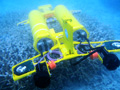 Australian researchers have developed a low cost, miniature submarine for underwater research on ecosystems such as the Great Barrier Reef.
 Hawaii is one of a few locations in the world where manta rays can be observed in the wild on a regular basis. Divers see up to 3 dozen manta rays feeding nightly on Kona manta ray dives. However, there is currently no protection for these manta rays in state waters. Manta rays around the world are being killed for their meat, skin, cartilage, and branchial elements which are being used in traditional Asian medicines.